Kinezis Life Editorial Board
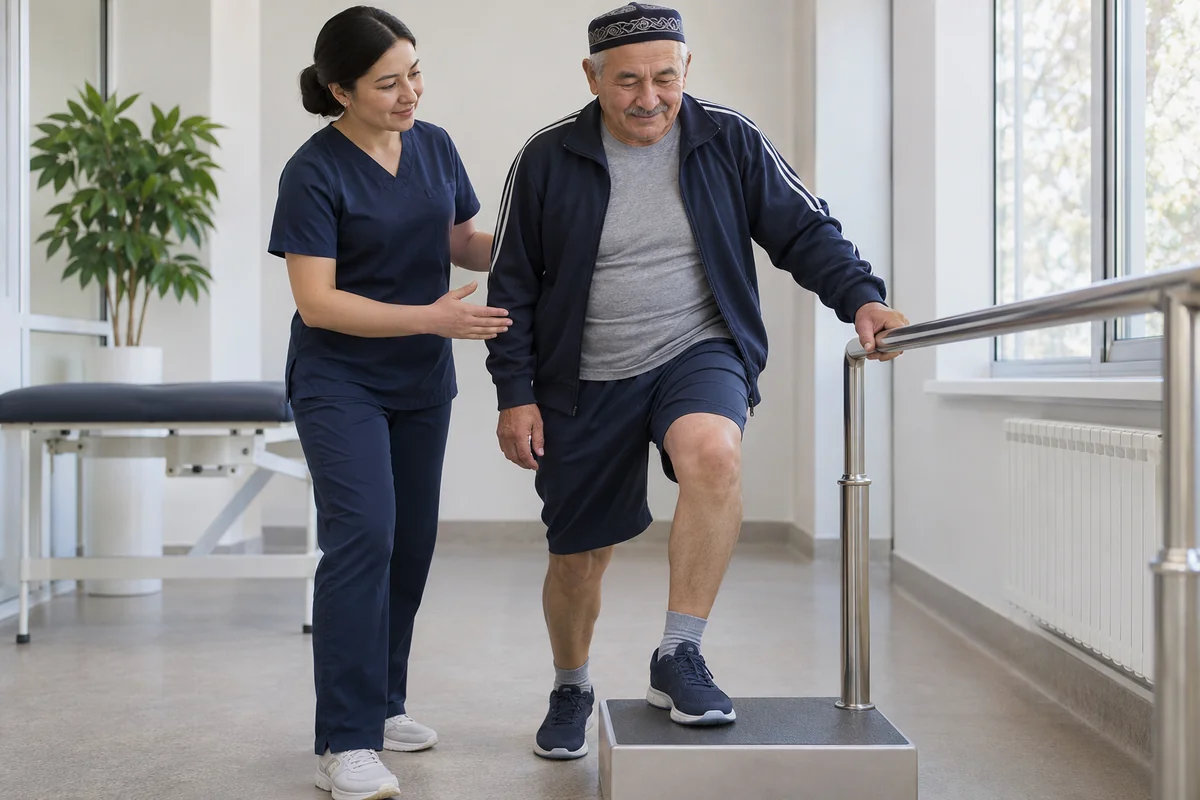
Exercise after 55: strength, balance and confident walking
How to choose goals for older classes, what to tell about falls and where to start in Astana.

After 55 years of age, the reason for doing physical therapy is often a very specific task: it is easier to get out of a chair, to walk longer, to use stairs more confidently or walk down a slippery street. Two people of the same age can have very different starting loads. In selecting a program, current opportunities, state of health and what helps a person maintain independence are important.
What is important to start classes
Tell us how much you're walking right now and whether you need support at home or on the street, whether you've had falls, dizziness or episodes of insecurity when cornering, take a list of medications, available conclusions and workout recommendations, and if the visit is organized by a relative, it's helpful to discuss together in advance what things are more important for a person to do on their own.
The goal is to take a familiar route or action, such as going from home to a stop with fewer stops, or getting out of your favorite chair is easier, which allows you to compare changes without complex measurements.
Why work on strength and balance?
For older adults, physical activity guidelines highlight work on endurance, muscle strength, and balance, each related to daily activities; for a long walk, you need load tolerance; for lifting from a chair, you need leg strength; for turning and changing direction when walking, balance control is useful.
The amount of activity and the level of support are adjusted according to the state and experience, and if there is a fear of falling, this should be mentioned at the beginning of the visit, the specialist will be able to assess the conditions in which the person is comfortable trying new movements.
How to evaluate the outcome
Choose tasks that can be repeated under similar conditions, such as getting up from the same chair, walking the same route, and using stairs with a familiar handrail, noting whether fatigue changes, whether you need help, and how you feel after a normal day.
What to clarify before booking in Astana
When choosing a center, ask about the availability of entrance, the ability to come with a chaperone and the format of the first visit. If you use a cane, walker or orthosis, tell the administrator about this, at the appointment, the doctor or instructor will be able to rely on your usual activity level and agreed medical restrictions when discussing the program.
How to discuss classes if you have a fear of falling
Tell us if you're not sure if you're turning in the kitchen, getting off the bus, going down a step, or on a rough road. If you've had a fall, think about the circumstances and how you felt before, and this information will help your doctor decide if you need additional checks and what support to start with.
In the first visits, it is convenient to discuss how to transfer the experience from the hall to everyday life, for example, if the goal is to go to the store on your own, state the usual route length, there are steps and stops, and a relative can help describe the route and accompany the visit, if the person wants to.
If you are planning a visit to Astana
In the form, choose one of the two Kinezis Life centers, leave a name, phone number and convenient method of communication, the administrator will agree on the time and tell you what to take to the reception.
Sources
The material is informational in nature, the tactics of examination and treatment are determined by the specialist at the appointment.