
Kinezis Life Editorial Board
Why does your knee hurt on stairs or while walking?
How to describe pain and swelling, what is evaluated when examining the knee and how to choose the load for osteoarthritis.
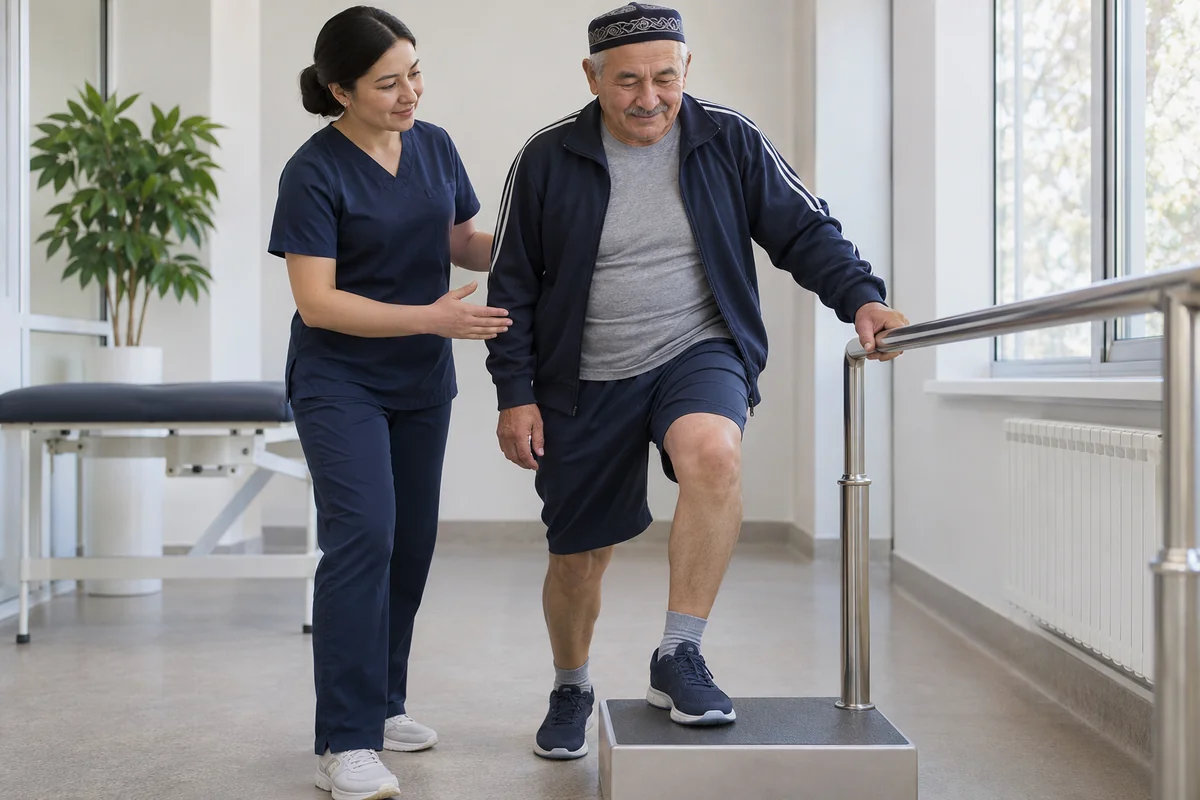
The first signs that the knee has become more debilitating are often noticed on the stairs, when getting up from a chair or after a normal walk. The pain on the descent and the pain after a long walk can be felt differently. At your appointment, it is useful to tell you what movement changed first and how it affects life. If you are looking for where to examine the knee in Astana, start by describing these details.
What the doctor needs to know about the symptoms
Note if it hurts on the front of the knee, on one side or deeper in the joint. Write down when the swelling occurs, how long the stiffness lasts after rest, whether there is a feeling that the knee is coughing up or blocking. If it started after a fall or a turn of the leg, state the date and what movement was there at the time of the injury.
On a staircase, it's useful to compare up and down, for example, when you go up, you move normally, and when you go down, you hold on to the railing and you put both your legs on each step, and this detail helps you determine which movements to check and how to evaluate the changes later.
How a doctor evaluates the knee
They're going to assess your movement volume, your strength, how you're transferring weight to your leg, and then they're going to see you get up, walk, or go down a step, and if you have any tests, take your results, and if your doctor suspects another condition or injury, they can refer you for additional diagnostics.
What is included in the program for osteoarthritis
NICE lists exercise as a core component of osteoarthritis care. The program may include muscle strengthening and general physical activity tailored to the patient's ability. In some people, the pain temporarily worsens at the beginning of the class. Talk to your doctor or instructor in advance about how you feel about changing your activity level and when you need to reappraise.
It's a lifestyle choice. It's important for someone to go up to their apartment, it's important for someone to take the route to the store to shop, and it's useful to reassess the same conditions: distance, number of stops, reliance on railings, and well-being after loading.
How to Prepare for Consultation
Take past tests, discharges, and a list of treatments you've tried before, name the movement you want to return the most, and figure out how to best distribute walking and exercise in the near future, and if your knee swells periodically, write down how much exercise it took and how long it lasted.
What is the difference between the first walk and the test
As a guideline, take a familiar route: write down how long it usually takes to walk, where you have to pause, and how your knee feels later. If you have to climb ice or high steps to go outside in Astana, discuss with your doctor what conditions are suitable for your initial assessment and exercise.
On a second visit, you can tell what changed with the same duration of the walk: more confident support, fewer stops or the ability to walk the usual route without severe fatigue: different results. Separately, specify how to account for swelling and stiffness if they appear after a few hours, rather than while walking.
If you are planning a visit to Astana
In the form, choose one of the two Kinezis Life centers, leave a name, phone number and convenient method of communication, the administrator will agree on the time and tell you what to take to the reception.
Sources
The material is informational in nature, the tactics of examination and treatment are determined by the specialist at the appointment.