Kinezis Life Editorial Board
Rehabilitation after surgery or injury: where to start
What to take from the discharge, how to coordinate the load with the surgeon and for what tasks the recovery is tracked.

After an injury or an operation, you usually want to know when you're going to walk, work and get back to your normal activities. Even after a similar operation, the initial conditions may vary, the type of intervention, the timing of healing and the limitations that your doctor has specified, and if you're looking for rehabilitation after an operation in Astana, start with a discharge and a clear description of what's so far difficult.
What documents to bring with you
Prepare your discharge, your surgeon's or traumatologist's recommendations, your exam results, and a list of exercises already prescribed. Separately, find restrictions on limb support, permitted movement, orthotic or walker use, if you're concerned, specify when a follow-up visit is scheduled, and who can review the restrictions.
If some of the recommendations were oral or it is not clear what date the restriction is valid, check with the medical team that treats you. Specific permissions are important for the selection of the program, as well as how the condition changes after normal exertion.
How does the initial evaluation go?
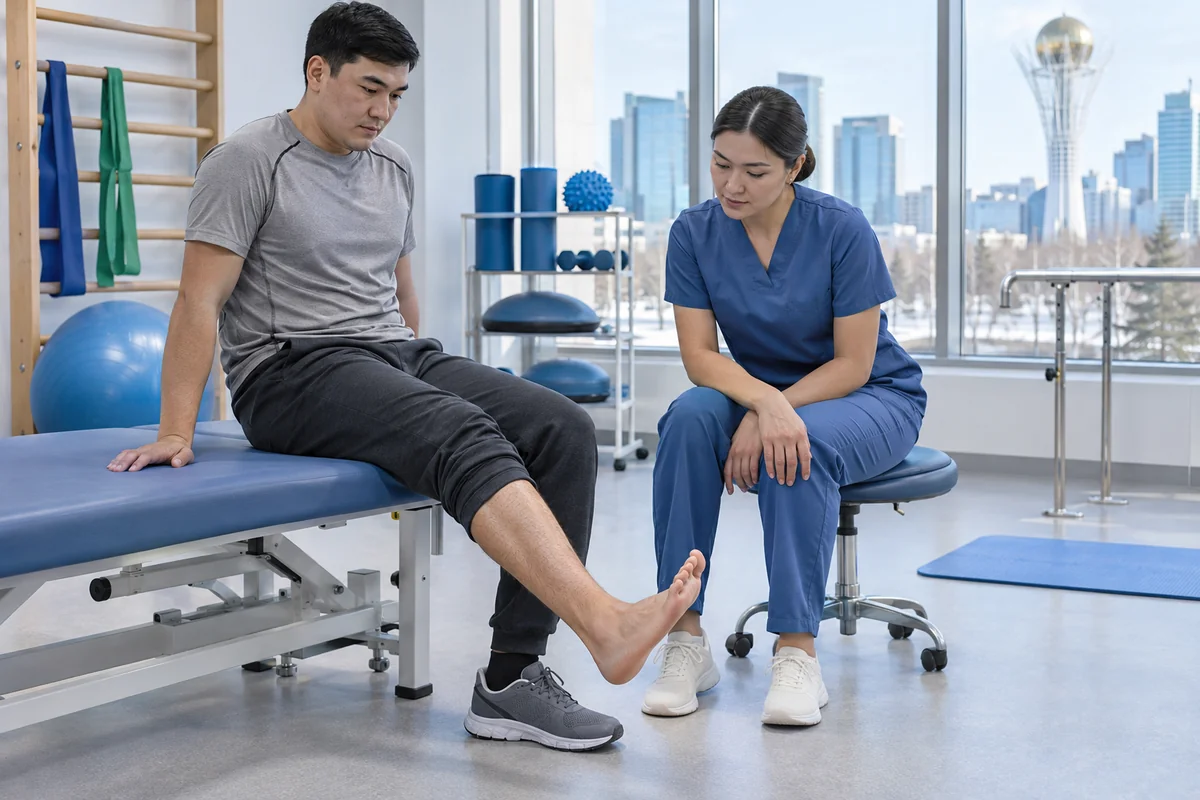
At the visit, they discuss what you are already doing on your own, where you need support or help, and what activities are important in the coming weeks, and they can assess your movement, strength, walking, and ability to stand up or use the stairs within the prescribed limits.
After some surgeries, such as joint replacements, rehabilitation begins in the hospital, and the follow-up takes into account the recommendations of the discharge team and the difficulties that arise at home, and the question of the timing and permissible load is decided individually.
How to Set Goals for the Next Stage
Formulate a household task that you want to master first, which can be the ability to get out of bed on your own, walk to the bathroom, or go for a short walk with the allowable support, and work with a specialist to find a way to track the distance, the number of stops, or the degree of assistance.
Progress is best discussed with comparable examples: If new symptoms appear after a change in load, tell the care team about this, specify in advance which changes require urgent treatment and what number to contact the team after discharge.
What to Ask Before Starting Class
Find out what exercises are allowed at the current stage, what you can do on your own and what changes you need to pause. Ask how to coordinate a new activity level with your surgeon or traumatologist and when to reassess your movements. If you're caring for a loved one, tell them how much help they're already doing at home, and what tasks raise the most questions.
How loved ones can help organize recovery
If you're accompanying a relative, agree with them what they want to return first and where they need help right now. Make a short list of household difficulties before the consultation, for example, there is a ladder without a second handrail, a chair below the hospital bed or you need to walk a long corridor to the elevator.
At the appointment, ask how to help with the usual activities within the assigned limitations. You can specify whether assistance is needed only for a specific task, how to use the already recommended support tool, and when to revise this order, agree on what changes to report to the treatment team and what documents to take for a second visit.
If you are planning a visit to Astana
In the form, choose one of the two Kinezis Life centers, leave a name, phone number and convenient method of communication, the administrator will agree on the time and tell you what to take to the reception.
Sources
The material is informational in nature, the tactics of examination and treatment are determined by the specialist at the appointment.